Restaurant Success Deconstructed: Eataly
Eataly is not entirely a restaurant and it isn't entirely a grocery store nor a standalone retail shop. On top of that, Eataly is an idea imported from Italy and requires a large footprint for its commercial space. Seem complicated enough for you? Yet, Eataly has managed to create a unique and successful business model. Let's find out what we can learn from the success of Eataly.
Abdullah M.
loading...
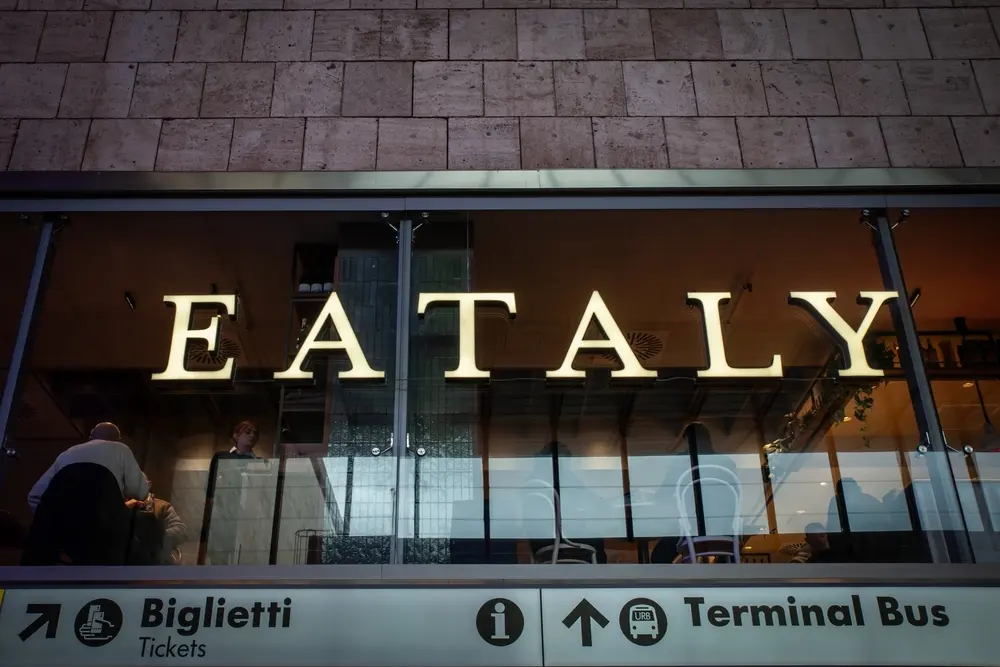
An Eataly location in Rome, Italy. Eataly combines restaurants, retail, and grocery in one location. What can we learn from the success of Eataly?
When you walk into an Eataly location, you are likely to think, “What exactly is this place?” Is it a grocery store with restaurants? A food hall with retail? Or a theme park for Italian food lovers?
The short answer is all of the above, and that is exactly why Eataly deserves our focus.
Deconstructing the success of the Eataly empire is vital to understanding how it overcame one of the most challenging problems in the restaurant industry: how to create multiple revenue streams from a single location while maintaining operational efficiency.
Most of the restaurants struggle to perfect one concept, but Eataly is an umbrella concept that operates restaurants, retail stores, cooking schools, and event spaces under one roof.
Founded in 2007, Eataly's business model has survived economic downturns and changing consumer preferences.
In this article, we'll explore the origin of Eataly and how it managed to convince customers to pay premium prices for Italian products in locations often far from Italy, while operating multiple restaurants with varying styles.
Moreover, by the end of the article, you’ll have an answer to a fundamental question every restaurant entrepreneur often considers that instead of competing in oversaturated markets, what if they created an entirely new category?
Let’s start!
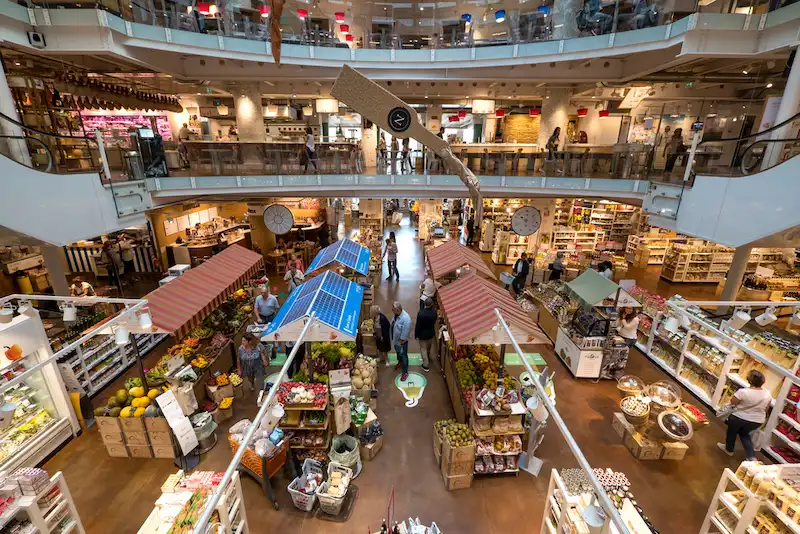
The multi-level interior of the Eataly location in Milan, Italy. Eataly prepared foods and Eataly food in general are available at Eataly food courts.
History of Eataly
Unlike some of the other chains discussed in our Restaurant Success Deconstructed series, Eataly is a relatively newer concept.
The history of Eataly starts with its launch in 2007 in Turin, Italy. It officially entered the US market in 2010 with its flagship location in New York's Flatiron District.
The name “Eataly” is a combination of eat and Italy and stands for eating Italian. This is a chain that takes great pride in promoting the history and food culture of Italy. But it all starts with Eataly owners.
Origin and Owner of Eataly
Eataly history starts with vision of Oscar Farinetti, a successful Italian entrepreneur, to create a marketplace that celebrates Italian food culture.
Farinetti literally made a sketch on a piece of paper in 2002 to map out his idea for Eataly. It was a simple idea that gathered high-quality food under one roof to celebrate Italian diversity.
Moreover, he envisioned the place as an “informal, natural, and simple place to eat, shop, and learn.”
Farinetti did five years of comprehensive research and opened the first Eataly location at an old vermouth factory in Turin.
It was the first multifunctional marketplace dedicated to Italian food. The highly innovative concept instantly got worldwide popularity, and Eataly owner, Oscar Farinetti made the decision to open up a branch in New York City with the help of investor chef Mario Batali.
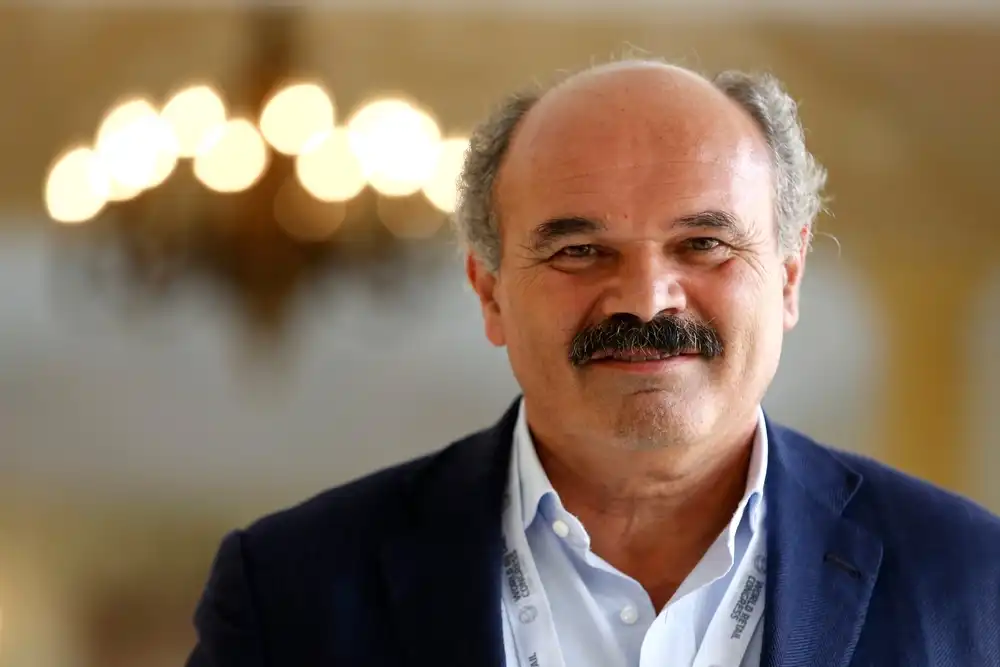
Businessman and investor Oscar Farinetti, the founder of Eataly, envisioned it as a place to celebrate Italian food culture.
Foundation of Eataly in Manhattan
In 2010, Lidia Bastianich and her son, Joe Bastianich, partnered up with Oscar Farinetti and Mario Batali to bring the Eataly concept to America.
The very first Eataly location in the Toy Center Building near Madison Square Park is over 50,000 square feet in size.
Eataly's success in Italy and size in New York City generated a lot of buzz and press coverage, leading to a highly successful launch, so much so that there were still lines extending down Fifth Avenue two weeks after its opening.
Eataly succeeded as a concept from the very start. The primary factors in this success were the vast experience of its owners and strategic location.
Eataly owners Joe Bastianich, Lidia Bastianich, and Mario Batali already had experience experimenting with different concepts. They had the combined experience of recognizing a massive opportunity in the restaurant industry.
The founding team brought complementary expertise that became one of the key reasons for its massive success:
✅ Lidia Bastianich had built a restaurant empire (the now-closed Felidia restaurant) and media presence around authentic Italian cooking.
✅ Joe Bastianich had business acumen and operational experience from managing multiple restaurant concepts, such as the acclaimed Babbo restaurant.
✅ Mario Batali provided celebrity chef credibilityand deep knowledge of Italian culinary traditions.

Chef Mario Batali, in this 2016 photo, was one of the original investors in Eataly USA.
Moreover, the original Eataly owner, Oscar Farinetti, had already succeeded in creating an immersive experience of Italian food culture in Torino.
His vision capitalized on the opportunity that Italian food was being sold without any context or education.
Overall, Eataly was founded to solve the knowledge gap while creating a profitable business model around Italian food education, and this new category has done wonders for the Eataly owners and investors.
The New York City Eataly location, opened in 2010, marked the beginning of the brand's global expansion.
The Trajectory of Eataly from a Simple Concept to Global Success
The trajectory of Eataly can be analyzed in 4 different phases:
Phase 1: Eataly New York Location (2010 - 2012)
Eataly's 50,000-square-foot successful debut in NYC represented a massive gamble in one of the world's most expensive retail markets.
The operational complexity of running multiple restaurants with different service styles, in addition to retail sections for pasta, cheese, wine, and Eataly prepared foods, would have overwhelmed most operators.
But the team behind Eataly took on this challenge and turned it into its unique value proposition. Every section was complementary instead of competing with each other.
For example, customers browsing the cheese section received samples and education that led to wine pairing suggestions, recipe ideas, and dining at the restaurants to experience professional preparation.
By 2012, Eataly had exceeded all early predictions by generating $70 million in revenue from the single Eataly NYC location.
Eataly also expanded to Rome in 2012 and chose a massive landmark site to attract people. Eataly's success in Rome further cemented its position as a cultural and retail institution and not just a restaurant chain.
Phase 2: Strategic Expansion and Format Refinement (2013-2017)
Eataly made a smart decision to customize its locations for local markets while keeping the same core brand principles. For instance, Eataly has a massive 63,000-square-foot location in Chicago that focuses on Midwest-focused concepts.
Similarly, the Boston location focuses on Eataly's prepared foods over extensive retail. On the other hand, Los Angeles' Eataly has comprehensive vegetarian options and casual formats for West Coast culture.
Interestingly, Eataly kept expanding its footprint during this period, with Eataly locations worldwide popping up in Milan, Istanbul, São Paulo, and Munich.

Authenticity and localization were key to Eataly's successful expansion into diverse markets such as São Paulo, Brazil. Here we see Italian cheeses displayed in an Eataly location.
Phase 3: Corporate Restructuring and Evolution (2018-2021)
Mario Batali faced sexual misconduct allegations in 2017, so Eataly decided to remove all the products bearing his image. He sold his minor ownership in 2019. However, the customer loyalty remained stable despite losing a founding celebrity chef.
Moreover, a massive investment of $198 million by the Italian investment firm Investindustrial brought capital for accelerated expansion to Las Vegas, Dallas, Silicon Valley, and Toronto.
Eataly also sailed through COVID-19 through its retail operations and delivery services while dining restrictions affected restaurant components.
Phase 4: Digital Integration (2022-Present)
Eataly has fully embraced modern tools and technologies since the global pandemic.
It conducts e-commerce and virtual cooking classes without abandoning experiential retail.
Moreover, multiple products and services are offered that add to the extensive revenue channels of this chain.
Today, Eataly is a huge empire that has:
✅ 13 Eataly locations USA
✅ 5 Eataly New York locations
✅ 2 Eataly locations in California
✅ Other Eataly US locations are in Chicago, Boston, Dallas, Las Vegas, Short Hills, and Aventura.
✅ 40 to 50 Eataly locations worldwide
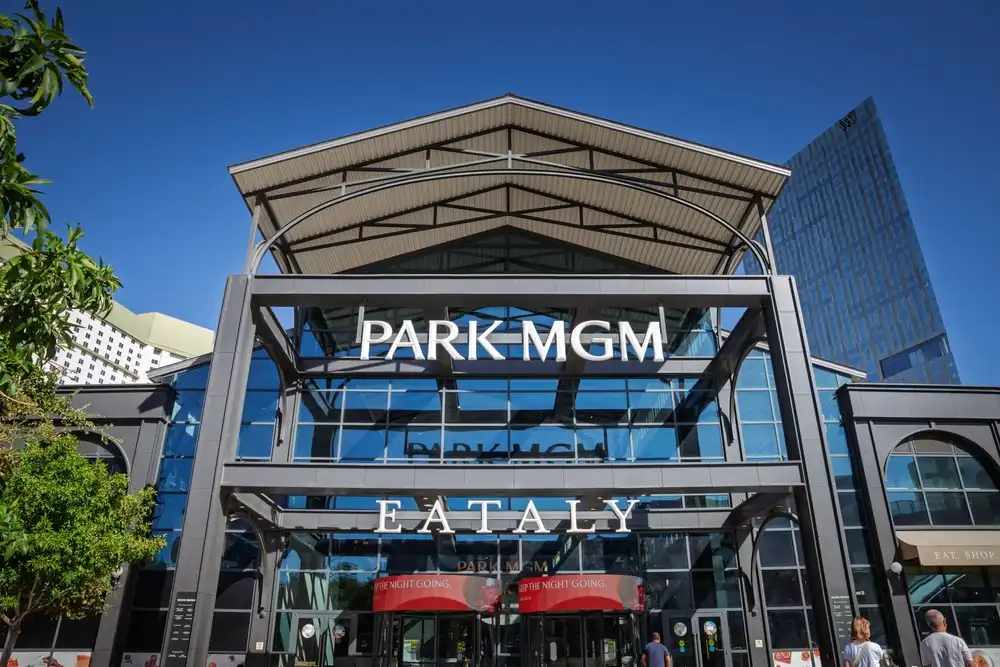
The entrance to the Eataly Las Vegas location, showcasing the global expanse of the Eataly brand.
Critical Elements of Eataly’s Success
The quick and successful expansion of Eataly is proof of the fact that the business model is delivering exceptional results.
So, let’s break down the critical elements of its success in detail.
1. Hybrid Marketplace with Restaurant
Eataly is a unique concept that combines a retail marketplace with an Eataly food court.
The Eat-Shop-Learn formula provides an immersive experience of Italian culture to the customers. They get to taste regional dishes, along with buying the necessary ingredients to recreate them at home.
It not only expands the revenue streams for Eataly owners, but also expands the target audience who might visit a Eataly location for multiple reasons and not just the dine-out experience.
2. Quality and Authenticity
The kind of quality, especially Italian regional specialties, offered at Eataly locations is unprecedented.
Customers get complete transparency in sourcing, which plays a key role in attracting an audience who likes authenticity and sustainability.
3. Destination Real Estate
One of the most common aspects of any Eataly location is that you can expect it to be grand and in prime locations. The investors have made a strategic decision to invest in flagship locations that make Eataly a must-visit destination wherever it opens up.
For instance, Eataly NYC Flatiron has become an attraction in its own right for locals as well as tourists.
4. Brand Storytelling
Eataly has a strong vision and brand story behind it. It is all about preserving Italian culinary culture, instead of just selling retail products or dine-out experiences.
Moreover, the presence of multiple restaurants in the Eataly food court brings diversity in storytelling about different producers, regions, and traditions. Such diversity attracts different segments of society.
5. Strategic Ownership and Investment
Eataly has managed to expand globally by strategically shifting ownership and partnering with investors. It has made excellent financial deals to expand globally without losing sight of its mission.
And even with quick expansion, not all locations of Eataly are identical. The company adapts size, offerings, and partnerships depending on market conditions and consumer demand.
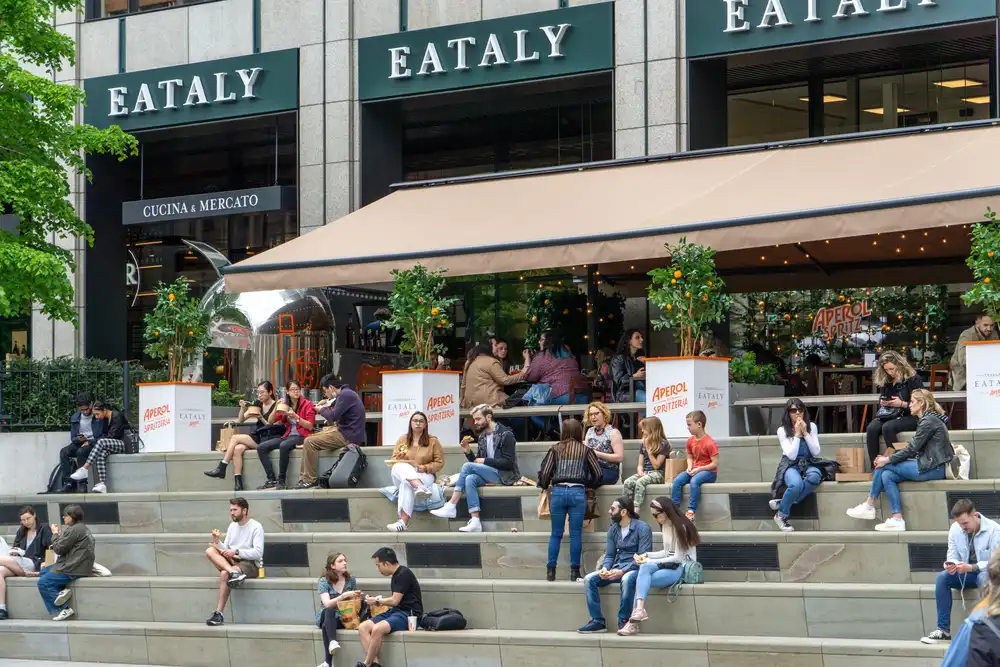
Eataly attracts food lovers, culinary enthusiasts, and those seeking authentic Italian experiences. Here we see patrons enjoying the vibrant atmosphere of the London location.
Lessons for Restaurateurs from Eataly’s Success
Let’s see what the key lessons are that restaurateurs, food entrepreneurs, and investors can learn from the success of Eataly as a unique concept:
1. Hybrid Experiences Lead to Higher Sales
Eataly food courts proved that customers are drawn to spaces where they can do more than just one thing. Eataly locations successfully combine dining, shopping, and learning into one environment.
Moreover, they have created a destination that people can spend hours in. The more time a customer spends in your business, the higher the chance of upselling and cross-selling.
Who this applies to:
✅ Large‑scale food entrepreneurs with massive investment for multi‑functional spaces.
✅ Restaurateurs seeking to diversify income streams, e.g,. by offering cooking classes
Who this may not apply to:
⛔️ Small food vendors with limited space and budgets.
⛔️ Businesses where customers prefer convenience over experiences.
2. Authenticity Builds Trust and Loyalty
68% of consumers today crave authenticity in the food industry. Eataly thrives because it offers real Italian food.
Moreover, it tells stories of artisan producers and maintains transparency in sourcing.
This makes customers feel they are part of something genuine and not a manufactured brand or a generic food chain.
Who this applies to:
✅ Restaurants promoting regional or cultural food traditions.
✅ Food brands competing on quality rather than price.
Who this may not apply to:
⛔️ Fast food operators with a primary focus on speed and low cost.
⛔️ Entrepreneurs dependent on mass‑produced ingredients.
3. Location is a Strategic Decision
Eataly has never just picked random spots. Instead, they chose landmark locations in high‑foot‑traffic areas. It is a strategic way to elevate a restaurant or food business into a destination in itself, drawing not just locals but also tourists.
Who this applies to:
✅ Flagship restaurant owners wanting optimum visibility and brand prestige.
✅ Businesses targeting tourists or high‑income urban customers.
Who this may not apply to:
⛔️ Restaurants in suburban or rural markets.
⛔️ Food entrepreneurs working with limited budgets.
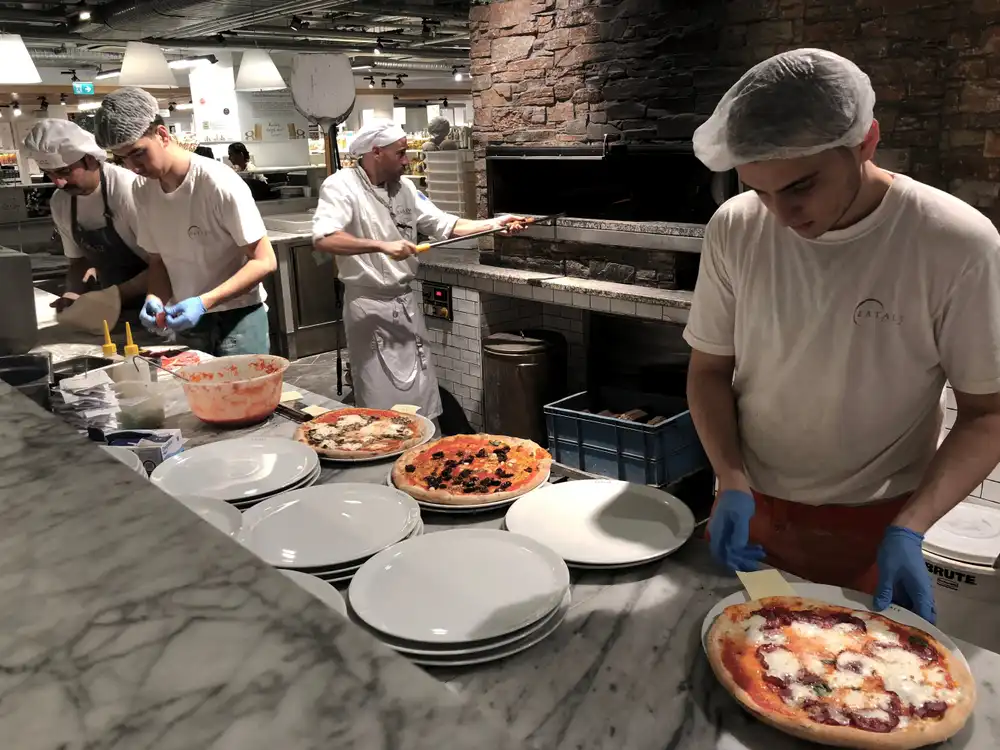
At the Eataly Istanbul, Turkey location, workers at a pizzeria prepare fresh pizzas, showcasing Eataly's commitment to authentic Italian cuisine worldwide.
4. Use Retail to Fund Experiential Components
Eataly's retail operations generate higher margins that help subsidize their educational programming and provide premium restaurant experiences. This type of financial structure with multiple revenue streams is useful to invest in customer experience without relying solely on food service revenue.
Who this applies to:
✅ Food chains or concepts with multiple components.
✅ Restaurant operators with access to specialty products or unique ingredients.
Who this may not apply to:
⛔️ Large-scale food chains with rigid business models
⛔️ Restaurants lacking access to differentiated retail products.
5. Partnerships and Ownership Matter
Eataly benefited from early partnerships with celebrity chefs and restaurateurs. Coverage by mainstream media also helped it gain credibility quickly. Later, private equity investments provided the capital for quick expansion. It gives the key lesson of aligning with individuals or institutions to have an exponential growth trajectory.
Who this applies to:
✅ Businesses considering external investment or high‑profile partnerships.
✅ Restaurateurs open to scaling through franchising or equity deals.
Who this may not apply to:
⛔️ Owners wanting to retain complete control and avoid outside investors.
⛔️ Small operations that might struggle to manage investor expectations.
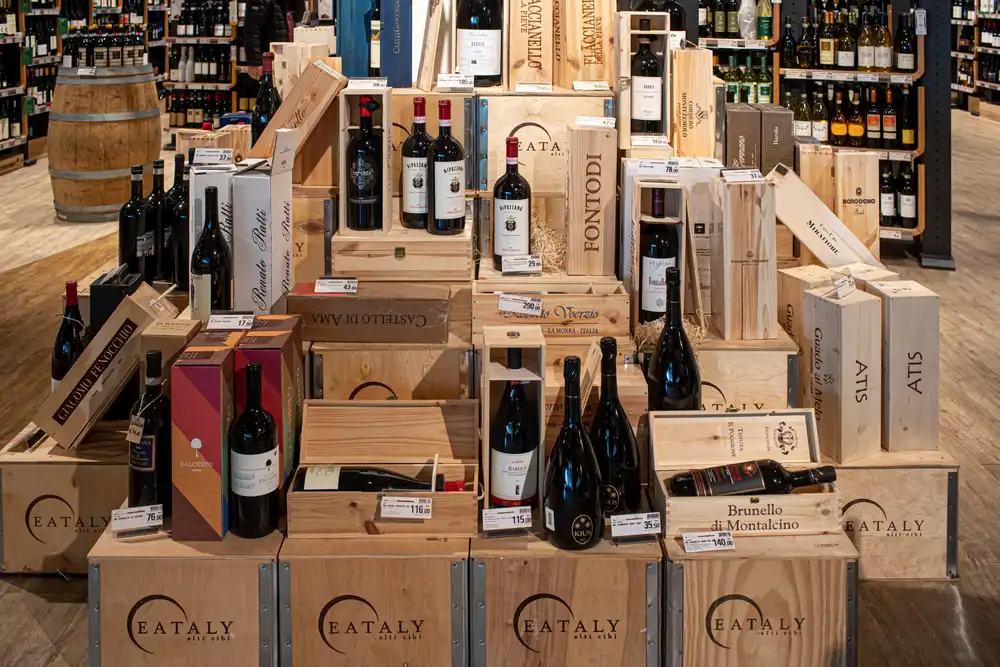
Italian wine continues to be a popular sales item at Eataly locations worldwide.
Conclusion
Eataly is proof of the fact that a restaurant doesn’t have to be just a restaurant.
By combining dining, shopping, and learning, Oscar Farinetti’s vision reshaped how people experience food, especially Italian food culture.
Smart partnerships, careful branding, and bold real estate investments have helped Eataly become a global force with over 45 locations worldwide.
For restaurateurs, the lessons are clear: authenticity matters, storytelling builds loyalty, and unique hybrid models can bring revenue from multiple streams.
Overall, Eataly locations worldwide continue to thrive, proving that bold ideas, when executed with clarity and vision, can transform an industry.

Learn from the success of Eataly. Apply it to your own business strategy.
©2025 Cocina Digital Hospitality Group, Inc. All rights reserved.
No part of this publication may be reproduced, stored in a retrieval system, or transmitted in any form or by any means, electronic, mechanical, photocopying, recording, or otherwise, without the prior written permission of the publisher.